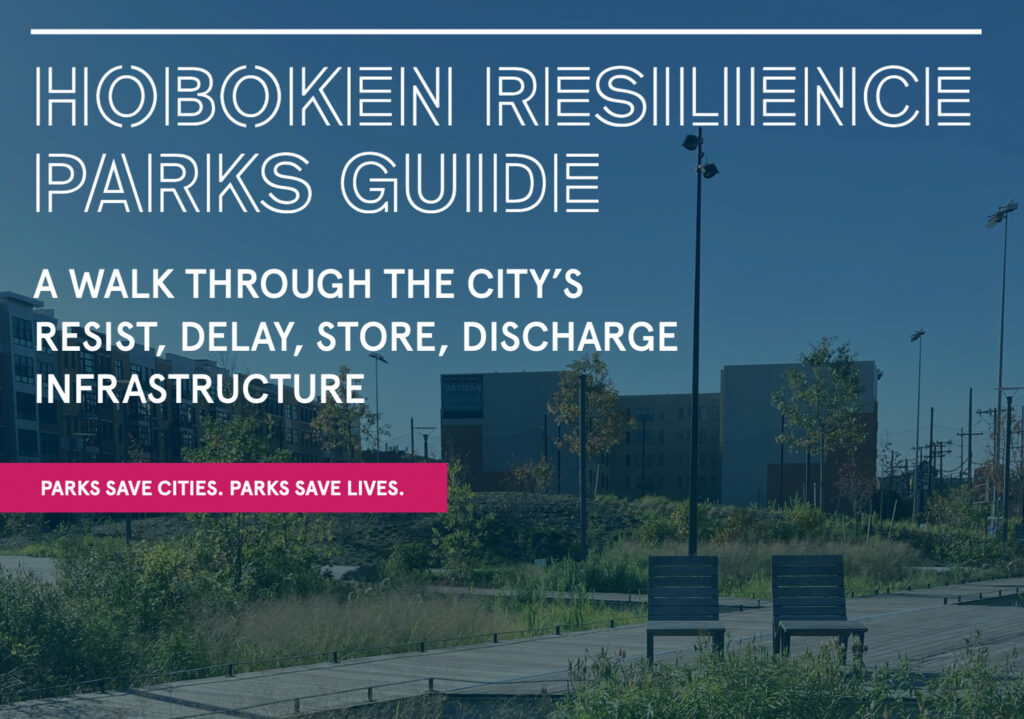
The City of Hoboken, through its Hurricane Sandy Rebuild by Design project reduced flooding by 88% by investing in green and gray infrastructure to capture and slow stormwater before it floods. Hoboken’s parks use a mix of interventions that can hold a combined 4.2 million gallons of heavy rain during a single event.
Northwest Resiliency Park features underground pumps and large storage tanks that manage stormwater during heavy rains. These systems collect runoff from 20 surrounding blocks, helping keep the adjacent neighborhood dry. Green infrastructure, like rain gardens and bioswales, and permeable surfaces keep the park itself functional during periods of increased rain. New York should follow this model, upgrading and building similar parks to address citywide flooding.
This new understanding of parks’ crucial role in flood protection can bring additional funding for capital and maintenance. Parks manage 14% of the City’s land, but only about 0.6% of the City budget over the past 40 years, far below the national standard of 1-2% allocation of a municipality’s budget. Parks offer immense potential to draw down federal and state funds, including programs from FEMA, HUD, and state funding. If the City were to recognize parks as vital infrastructure—as it does highways—and properly invest in upgrading and maintaining its parks, these public spaces could protect and save lives and save billions of dollars. Redesigned parks serve as stormwater mitigation sites, flood buffers, cooling hubs and more.