
The Ibrahim Abdul-Matin Senior Rainproof Fellowship, hosted by Rebuild by Design, is a targeted capacity-building intervention designed to invest in senior, cross-sector leaders whose work already advances urban flood resilience and equips them to operate as system integrators—bridging silos, accelerating coordination, and translating innovation into practice at scale.
Named in honor of Ibrahim Abdul-Matin (1979–2023), the Fellowship reflects his core theory of change: that effective environmental action depends on leaders who can bridge public institutions, community knowledge, and moral imagination.
Read more about Ibrahim’s legacy here.
STRATEGIC CONTEXT AND SYSTEMS GAP
Over the past decade, Rebuild by Design has helped shift how cities approach climate resilience—moving from fragmented, project-based responses toward integrated, people-centered, and design-led systems change. Through landmark initiatives such as the Rebuild by Design competition following Hurricane Sandy and the ongoing Rainproof NYC initiative, Rebuild has demonstrated that effective adaptation requires not only capital investment and policy reform, but also sustained coordination across institutions and communities.
Yet a persistent gap remains: while plans, pilots, and funding streams proliferate, there are few structured mechanisms to support the leaders capable of navigating institutional complexity, maintaining cross-sector trust, and carrying adaptation work forward over time. These individuals are essential to governance capacity but are often unsupported, under-resourced, and vulnerable to burnout. The Fellowship responds directly to this gap by treating leadership capacity as critical infrastructure. Rather than functioning as a standalone program, the Fellowship is embedded within Rainproof NYC—Rebuild’s citywide framework for addressing increasingly severe rainfall—ensuring alignment with ongoing policy, planning, and implementation efforts.
This investment establishes a replicable model for strengthening human capacity within urban climate governance, leverages Rebuild’s proven institutional platform, and positions the Fellowship for sustained philanthropic and public-sector support.
THE CHALLENGE
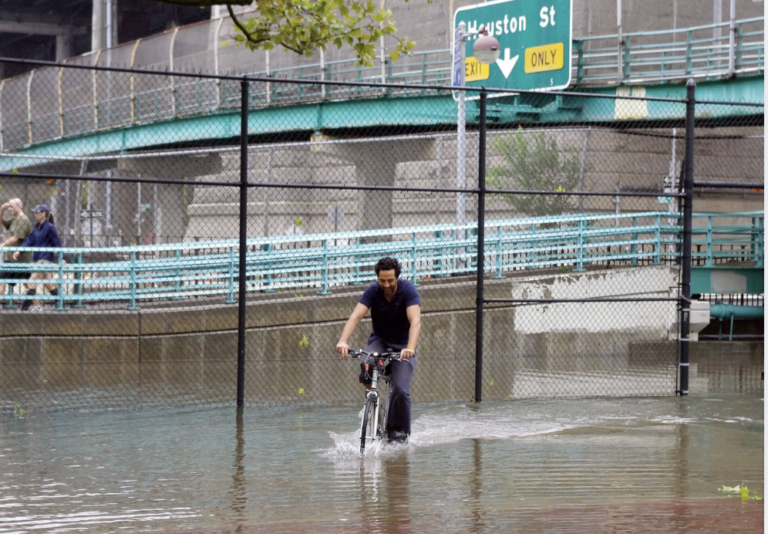
New York City is already on the front lines of climate change: increasingly frequent and intense rainfall events are overwhelming century-old sewer infrastructure, flooding homes and transit systems, disrupting economic life, and taking lives. In the past decade alone, extreme rainstorms—including Hurricanes Ida, Henri, and Ophelia—have exposed deep vulnerabilities in the city’s built environment and governance systems, with climate projections indicating that these impacts will accelerate in both frequency and severity in the years ahead.
In practice, these impacts are not evenly distributed. Extreme rainfall and flooding function as a poverty amplifier in New York City—disrupting work, damaging housing, increasing household debt, and accelerating displacement for low-income residents and renters—making climate adaptation a core economic resilience and anti-poverty strategy.
THE SOLUTION
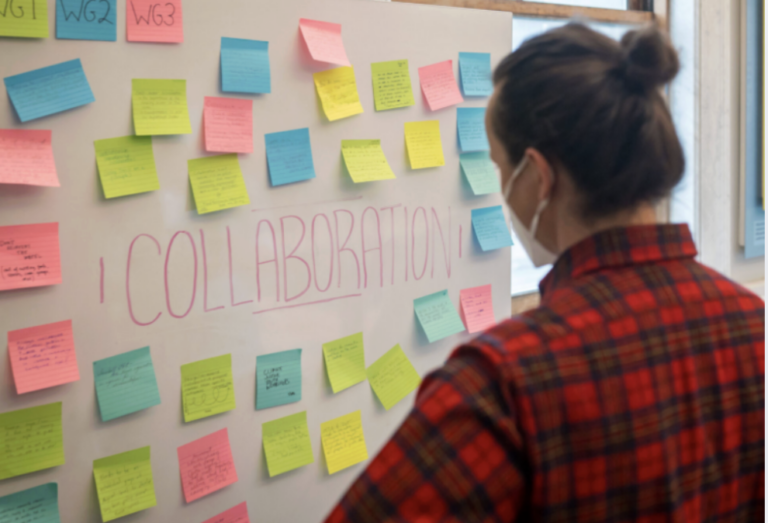
New York City does not have a shortage of ideas, policies, or pilot projects for climate adaptation. It has a shortage of people who can translate across systems—community, government, data, design, culture—and move solutions from insight to durable adoption. As climate impacts accelerate and federal disaster funding grows more uncertain, strengthening this human infrastructure has become a core governance challenge for cities.
This conclusion is reinforced by philanthropic research: in a national survey summarized by the Stanford Social Innovation Review, 95% of nonprofit leaders who received capacity-building support reported that it delivered moderate or major benefits to their organization, underscoring leadership and institutional capacity as among the highest-leverage investments funders can make.
MEET THE 2026-2027 inaugural SENIOR FELLOWS
As part of the Rainproof [Your Community’s Name] community partners, Rebuild by Design worked with ten organization and initiatives across New York City to bring the Rainproof NYC Working Group recommendations to the local level. Through that work, Rebuild worked closely with Tiffany Baker and Nick Nyhan who used all the resources they could leverage to center the people most affected by heavy rainfall, and drive creative solutions. This year, Rebuild by Design will recognize their efforts by awarding their outstanding work with this fellowship.
Tiffany Baker | Visual Artist & Oral Historian
Tiffany Baker is a Brooklyn-based visual artist whose Dear Neighbor Project uses public art and oral history to document and respond to flooding in Gowanus. Her work demonstrates how cultural practice can function as climate infrastructure—strengthening community awareness, preparedness, and cohesion in flood-prone neighborhoods.
Nick Nyhan | Data Entrepreneur & Civic Technologist
Nick Nyhan is a data entrepreneur and civic technologist who founded The City Sponge to address gaps in flood preparedness and recovery information, particularly for renters, who are often forgotten in government administrated post-flood programs. Through digital tools, convenings, and partnerships, his work improves access to actionable knowledge and supports more equitable climate risk governance.
HOW WILL THE FELLOWS WORK WITH RAINPROOF NYC?
Rainproof NYC is a city-wide initiative led by Rebuild by Design to fill the gaps and lead NYC to learn to live with increasingly heavy rainfall. Since 2022, Rebuild has been combining research, global inspiration, and convening hands-on collaboration across agencies, nonprofits, communities, and experts. to chart a path to systematically transform our city into a giant sponge. Read more about Rainproof NYC here>>
In 2026, the Senior Fellows will partner with Rebuild by Design to help launch Rainproof University, a multi-sector climate leadership and learning platform designed to train 200–300 New Yorkers annually. Rainproof University will build shared literacy around urban hydrology, governance, equity, and climate risk, while cultivating a pipeline of practitioners capable of coordinated action across agencies, communities, and disciplines.
By building practical climate literacy and cross-sector coordination among practitioners working closest to frontline communities, Rainproof University helps reduce the cascading economic disruptions—lost income, housing instability, and displacement—that extreme rainfall disproportionately imposes on low-income New Yorkers
This approach allows the Fellowship to serve as both a leadership investment and a capacity multiplier—converting individual expertise into institutional knowledge and longer-term system resilience.
ABOUT IBRAHIM ABDUL-MATIN (1979–2023)
Ibrahim Abdul-Matin brought love, passion, and a sense of humor to working on environmental policy. He worked across the public, private, and civic sectors on several affairs including sustainability, technology, community engagement, sports, and new media to influence many realms of society. Part environmentalist and part community organizer, his book, Green Deen: What Islam Teaches about Protecting the Planet, draws on research, scripture and interviews with Muslims to trace Islam’s profound dedication to humankind’s collective role as stewards of the Earth. And that people of all beliefs can appreciate the gifts and contributions that Islam and Muslims bring to the environmental movement.
Ibrahim had a career in service including the sustainability policy advisor to Mayor Michael Bloomberg and Director of Community Affairs at the NYC Department of Environmental Protection during Mayor Bill de Blasio’s administration. As a young person, Ibrahim served as Director of Youth Programs for the Prospect Park Alliance, an Outward Bound instructor, and co-founded NYC’s first public high school for future climate leaders – the Brooklyn Academy for Science and the Environment. While at the Movement Strategy Center, he co-authored the seminal book, “Future 500,” an anthology of movement leaders and organizations that blended youth organizing and technology. He received numerous awards including the National Urban Fellow (2008), Green for All Fellow (2009), and was named one of the 40 Under 40 Rising Stars in New York City Politics from City & State Magazine (2015), and NCAA Scholar-Athlete of the Year (1998) for his decorated career as a Division 1 Linebacker. Abdul-Matin held a BA from the University of Rhode Island and a MPA from CUNY (City University of New York) Baruch College. Ibrahim passed away in 2023 and leaves behind 3 sons – Ismael, Yousuf, and Mustafa – his greatest loves, his most beloved legacy.
All gifts to support this work will go through Rebuild by Design at New York University, with 100% of the gift applied toward the Fellowship.