
ATLAS OF DISASTER: NORTH CAROLINA
Image Credit: Flood damage, North Carolina, 2016 | CAPT. Michael Wilber
North carolina cannot wait any longer
Communities across North Carolina are confronting mounting threats from disasters driven by extreme weather and environmental hazards, including flooding, hurricanes, severe storms, and extreme heat that endanger lives, public infrastructure, and the state’s economy.
These events are repeatedly damaging transportation networks, schools, hospitals, water systems, utilities, and energy infrastructure—imposing rising costs on North Carolina families and businesses. While state investments are critical for recovery and preparedness, current funding levels fall short of what is required to meet the scale of risk. As disasters intensify, delayed or insufficient investment increases long-term costs, deepens community vulnerability, and weakens financial stability. The need for sustained state funding for resilient infrastructure is urgent. We cannot wait any longer.
Rebuild by Design’s new Atlas of Disaster: North Carolina reveals that from 2011 to 2024:
- North Carolina experienced 17 federally declared disaster declarations for extreme weather.
- North Carolina received the 7th highest total federal disaster relief nationwide ($4.5B) and the 12th highest per capita federal disaster relief ($428).
- More than $4.5 billion in FEMA and HUD post-disaster funding was allocated to the state during this period.
- Wake County experienced the highest number of disasters with eight disaster occurrences in the state, and 32 counties experienced five or more disasters.
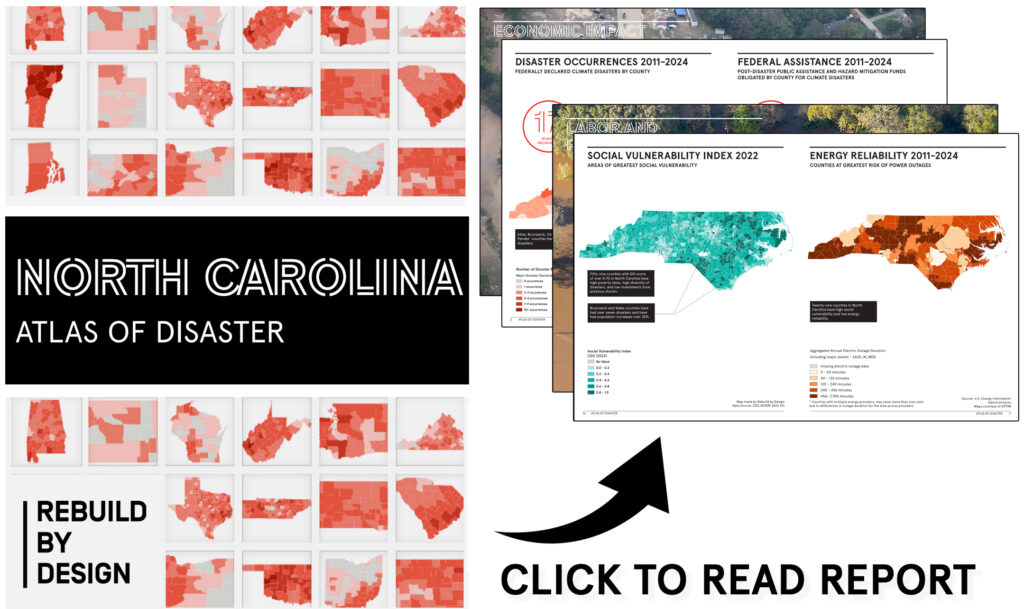
FINDINGS
17 DISASTER DECLARATIONS
Between 2011 and 2024, North Carolina faced 17 federally declared major disasters—14 of which were flood-related—underscoring the urgency for robust flood mitigation efforts.
OVER $4.5 BILLION IN FEDERAL POST-DISASTER ASSISTANCE
These disasters have cost over $4.5 billion in taxpayer dollars, highlighting the growing economic strain on local communities and the urgent need for sustainable risk-reduction and recovery funding.
340K PROPERTIES AT FLOOD RISK
Over 340,000 residential and commercial properties—including more than 1,300 along North Carolina’s coast—are at risk of chronic flooding. (EDF, 2020)
FIND YOUR LEGISLATIVE REPRESENTATIVES
ATLAS OF INSPIRATION ACROSS NORTH CAROLINA
The Atlas of Inspiration is a growing collection of infrastructure projects, planning strategies, and funding approaches that are already making an impact. From green infrastructure to affordable housing and resilient transportation, these projects show how communities across the country are addressing multiple challenges while improving daily life. Many of these ideas highlight how smart planning can drive economic growth, advance equity, and create lasting positive change.
North Carolina
Category: Infrastructure, Plan
Year: 2022
Funding: $242,624 primarily funded through a North Carolina Environmental Enhancement Grant (EEG) in addition to a partnership between the Town of Hillsborough and the Piedmont Conservation Council
BACKGROUND
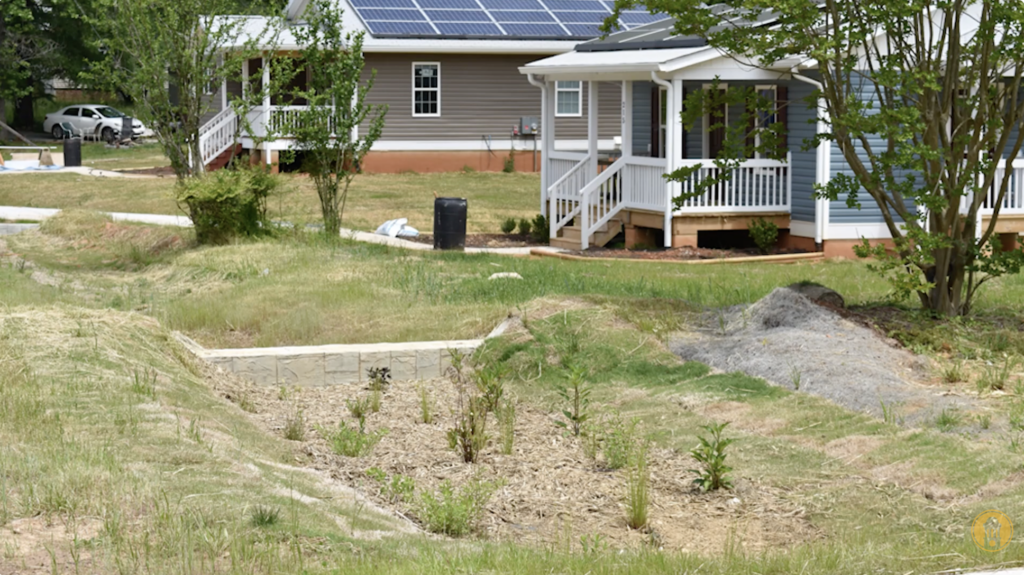
In response to repeated road flooding on Odie Street in Hillsborough, North Carolina, The Town of Hillsborough Public Works Division along with Habitat for Humanity, Fairview Community Watch Group, and the Orange County Soil and Water Conservation District initiated a project to install green stormwater infrastructure and revitalize a Hillsborough neighborhood. Through a collaborative, community-driven process, the ditches on the street were transformed into bioswales and treatment swales. This project included the installation of 15 rain barrels, 4,000 square feet of native plantings, five educational events on stormwater pollution and green infrastructure for homeowners and the local community. The newly installed bioswales are estimated to provide an annual nitrogen and phosphorus pollutant load reduction of 84% and 92% respectively. This collaborative effort in a historically African American community is advancing environmental justice, improving drainage, reducing irrigation costs, adding beauty to the neighborhood, and providing pollinator habitat.
TOGETHER, WE CAN FIX THIS
North Carolina’s future depends on proactive planning and bold investment today. Risks from extreme weather and vulnerable infrastructure threaten lives, homes, and local economies, and reactive support alone is not enough. Hurricane Helene alone caused an estimated $59.6 billion in damages in the state, making it one of the costliest hurricanes in U.S. history, highlighting the urgent need for pre‑disaster mitigation and resilient infrastructure funding (North Carolina Department of Commerce, 2024).
1. INVESTMENT BEFORE DISASTERS
Expand pre-disaster mitigation funding so communities can strengthen infrastructure before disasters strike. This should supplement—not replace—post-disaster recovery support.
2. Fund Proactive Solutions for Lasting Impact
Explore new funding sources, like voter referendums, insurance surcharges, and state-level superfund laws, to ensure dedicated resources for climate resilience.
3. BUILD RESILIENT INFRASTRUCTURE
Design every new project to withstand climate events, address physical and social vulnerabilities, and maximize the impact of taxpayer investments.
Rebuild by Design is working to secure dedicated funding for resilient infrastructure, empowering all of North Carolina communities to invest in resilience today.
We are seeking organizations, community leaders, and dedicated advocates who can play an active role in advancing resilience efforts across the state. Your support is critical in securing the funding and policies that will protect North Carolina communities and infrastructure for the future. Contact us >>
THE ATLAS SERIES
ATLAS OF DISASTER REPORT
Released in 2022, the Atlas of Disaster offers a county-by-county snapshot of disasters across the U.S. from 2011–2021. The report highlights widespread impacts, gaps in federal policy, and the urgent need for pre-disaster investment in both physical and social infrastructure. Read the report >>
ATLAS OF ACCOUNTABILITY TOOL
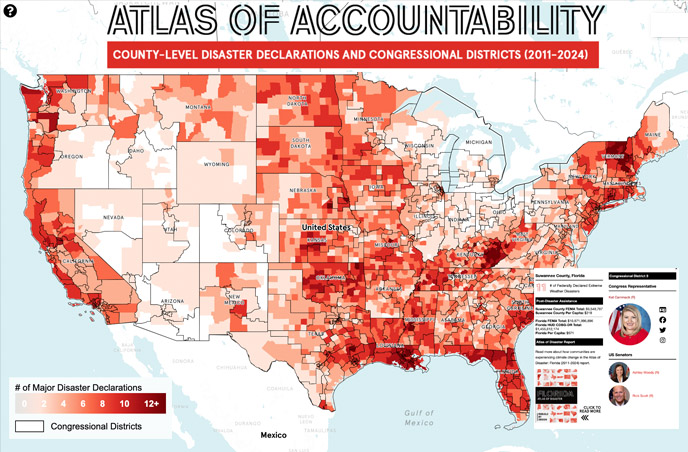
The Atlas of Accountability maps federal disaster declarations and post-disaster assistance obligations for every county in the U.S., with overlays by congressional district between 2011-2024. Explore the map >>

DISASTER RESILIENCE INFRASTRUCTURE WE LOVE
Explore a growing collection of resilient infrastructure projects, planning strategies, & funding approaches that are currently helping communities across the U.S. build resilience. Get inspired >>
SHARE YOUR STATE & STORY
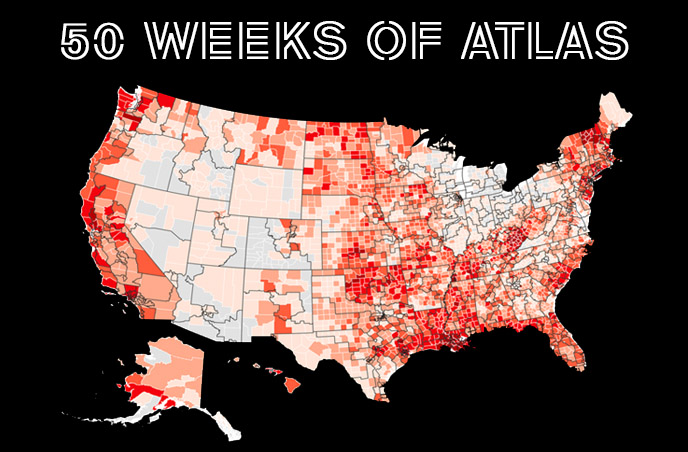
Each week in 2025, we shared a key finding from the Atlas for all 50 states through downloadable graphics and captions. Explore your state’s disaster risk data and help spread awareness by sharing it on social media. Download your state >>