
ATLAS OF DISASTER: WEST VIRGINIA
Image Credit: Flood damage, West Virginia, 2016 | West Virginia Army National Guard
WEST VIRGINIA cannot wait any longer
Communities across West Virginia are confronting mounting threats from disasters due to extreme weather and environment hazards, including flooding, landslides, mudslides, wind events, and storms that threaten lives, public infrastructure, and the state’s economy.
These events damage transportation networks, schools, hospitals, water systems, utilities, and other public assets, and impose increasing costs on West Virginia families and businesses. Without sustained investment in long-term resilience, these costs will only grow.
Rebuild by Design’s new Atlas of Disaster: West Virginia reveals that from 2011 to 2024:
- West Virginia experienced 23 federally declared major disasters due to extreme weather, costing taxpayers more than $950 million in federal disaster assistance
- $694M from FEMA (Public Assistance & Hazard Mitigation)
- $256M from HUD’s Community Development Block Grant Disaster Recovery Program
- Lincoln County experienced 12 disasters, the most in the state, while Wayne, Roane, Kanawha, Cabell, and Logan Counties each faced 9 disasters.
- Every one of West Virginia’s 55 counties has felt the impact of extreme weather disasters during this period.
- Among the 23 major disasters, 19 involved flooding and 17 involved landslides or mudslides, highlighting West Virginia’s acute and persistent exposure to water-related extremes.
According to the Electric Infrastructure Security Council (EIS) Council, when infrastructure fails, it causes significant economic strain beyond immediate cleanup costs. Damage to roads and bridges disrupts commerce and travel, and extended power outages and infrastructure failures slow economic activity in communities already struggling with workforce and economic development challenges.
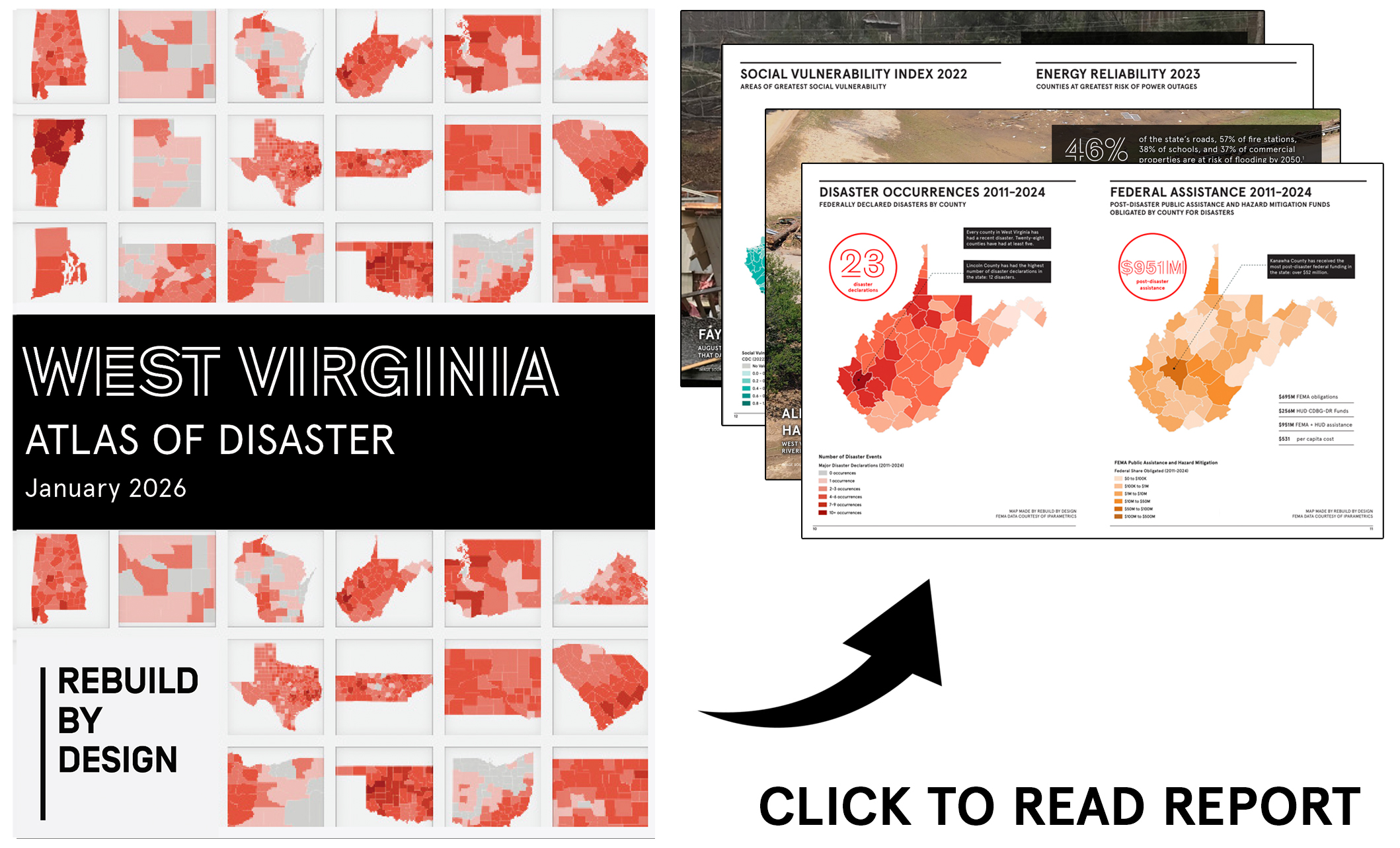
23 DISASTER DECLARATIONS
Between 2011 and 2024, West Virginia faced 23 federally declared major disasters—19 of which were flood-related—underscoring the urgency for robust flood mitigation efforts.
OVER $950 MILLION IN FEDERAL POST-DISASTER ASSISTANCE
These disasters have cost over $950 million in taxpayer dollars, highlighting the growing economic strain on local communities and the urgent need for sustainable risk-reduction and recovery funding.
$50-55 million in road damage
The June 2016 flood produced an estimated $50–55 million dollars in road damage as repair assessments were completed (MetroNews, 2016).
FIND YOUR LEGISLATIVE REPRESENTATIVES
ATLAS OF INSPIRATION ACROSS WEST VIRGINIA
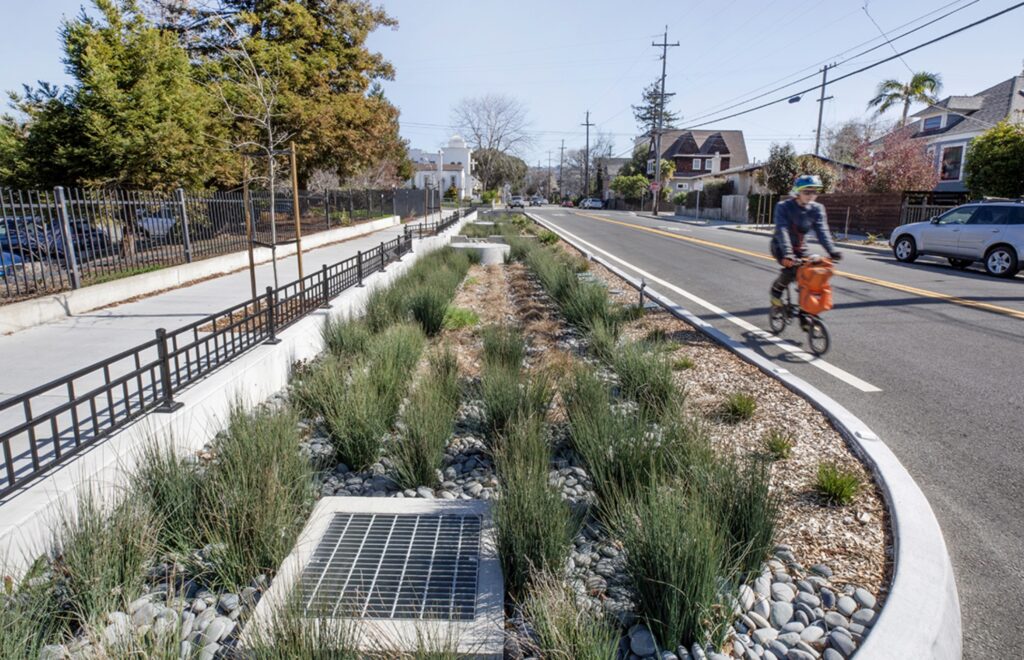
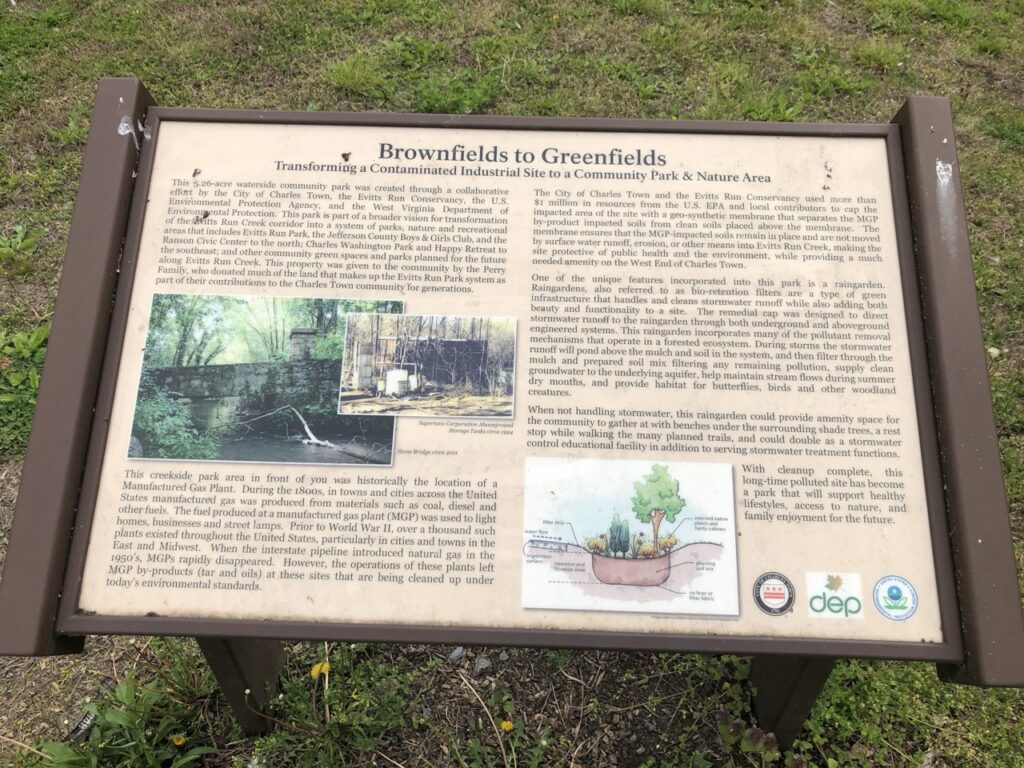
The Atlas of Inspiration is a growing collection of infrastructure projects, planning strategies, and funding approaches that are already making an impact. From green infrastructure to affordable housing and resilient transportation, these projects show how communities across the country are addressing multiple challenges while improving daily life. Many of these ideas highlight how smart planning can drive economic growth, advance equity, and create lasting positive change.
TOGETHER, WE CAN FIX THIS
West Virginia’s future depends on proactive planning and bold investments today. Risks from extreme weather, aging infrastructure, and development in vulnerable areas are threatening lives, homes, and local economies. Disasters—from the 2016 flood ($1.1 billion in damages, 23 lives lost) to the June 2025 floods (9 lives lost) show that reactive support is not enough. With disasters becoming more common and costly, the time to act is now.
1. Invest in Statewide Resiliency
Secure predictable, flexible state funding to strengthen communities, protect homes, and safeguard local economies from floods and extreme weather.
2. Fund Proactive Projects for Lasting Impact
Establish dedicated, long-term state funding for resilient infrastructure. Consider innovative solutions, such as green bonds, dedicated resilience funds, or regional partnerships, to generate the billions needed for flood protection, energy upgrades, and emergency preparedness.
3. Equip Local Communities
Support community-driven adaptation projects, especially in the most vulnerable and historically underserved areas. Give counties and municipalities the tools, guidance, and funding to design and implement solutions that meet their specific risks and priorities.
Rebuild by Design is working to secure dedicated funding for resilient infrastructure, empowering all of West Virginia communities to invest in resilience today.
We are seeking organizations, community leaders, and dedicated advocates who can play an active role in advancing resilience efforts across the state. Your support is critical in securing the funding and policies that will protect West Virginia communities and infrastructure for the future. Contact us >>
THE ATLAS SERIES
ATLAS OF DISASTER REPORT
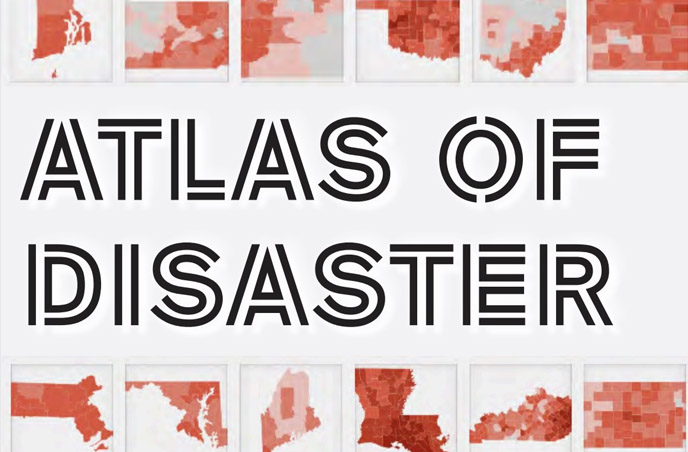
Released in 2022, the Atlas of Disaster offers a county-by-county snapshot of disasters across the U.S. from 2011–2021. The report highlights widespread impacts, gaps in federal policy, and the urgent need for pre-disaster investment in both physical and social infrastructure. Read the report >>
ATLAS OF ACCOUNTABILITY TOOL
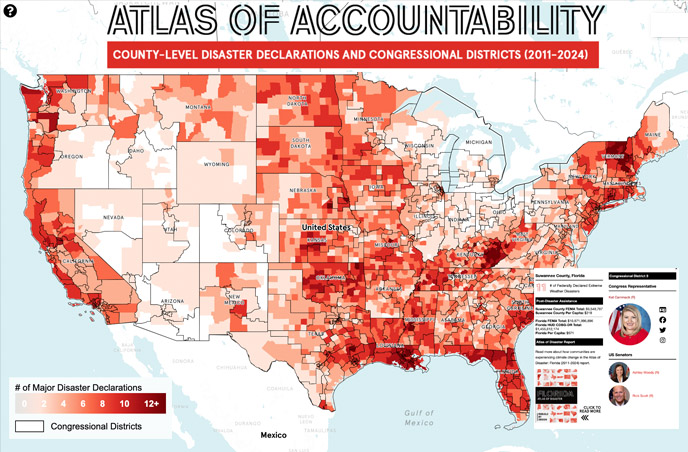
The Atlas of Accountability maps federal disaster declarations and post-disaster assistance obligations for every county in the U.S., with overlays by congressional district between 2011-2024. Explore the map >>

DISASTER RESILIENCE INFRASTRUCTURE WE LOVE
Explore a growing collection of resilient infrastructure projects, planning strategies, & funding approaches that are currently helping communities across the U.S. build resilience. Get inspired >>
SHARE YOUR STATE & STORY
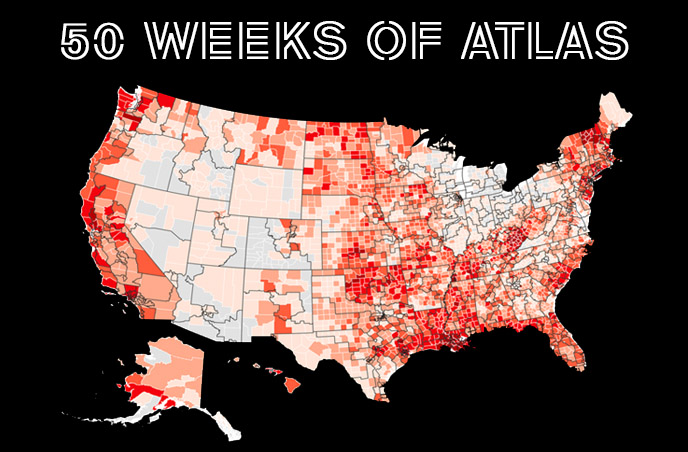
Each week in 2025, we shared a key finding from the Atlas for all 50 states through downloadable graphics and captions. Explore your state’s disaster risk data and help spread awareness by sharing it on social media. Download your state >>