
ATLAS OF DISASTER: CONNECTICUT
Image Credit: Cameron Blaylock
CONNECTICUT cannot wait any longer
Communities across Connecticut face escalating challenges from climate change: more frequent flooding, extreme heat, rising sea levels, and increasingly intense nor’easters. These threats endanger people, infrastructure, and the state’s economy. To meet these challenges, Connecticut must prioritize sustained investment in long-term resilience.
Rebuild by Design’s new Atlas of Disaster: Connecticut reveals that from 2011 to 2024:
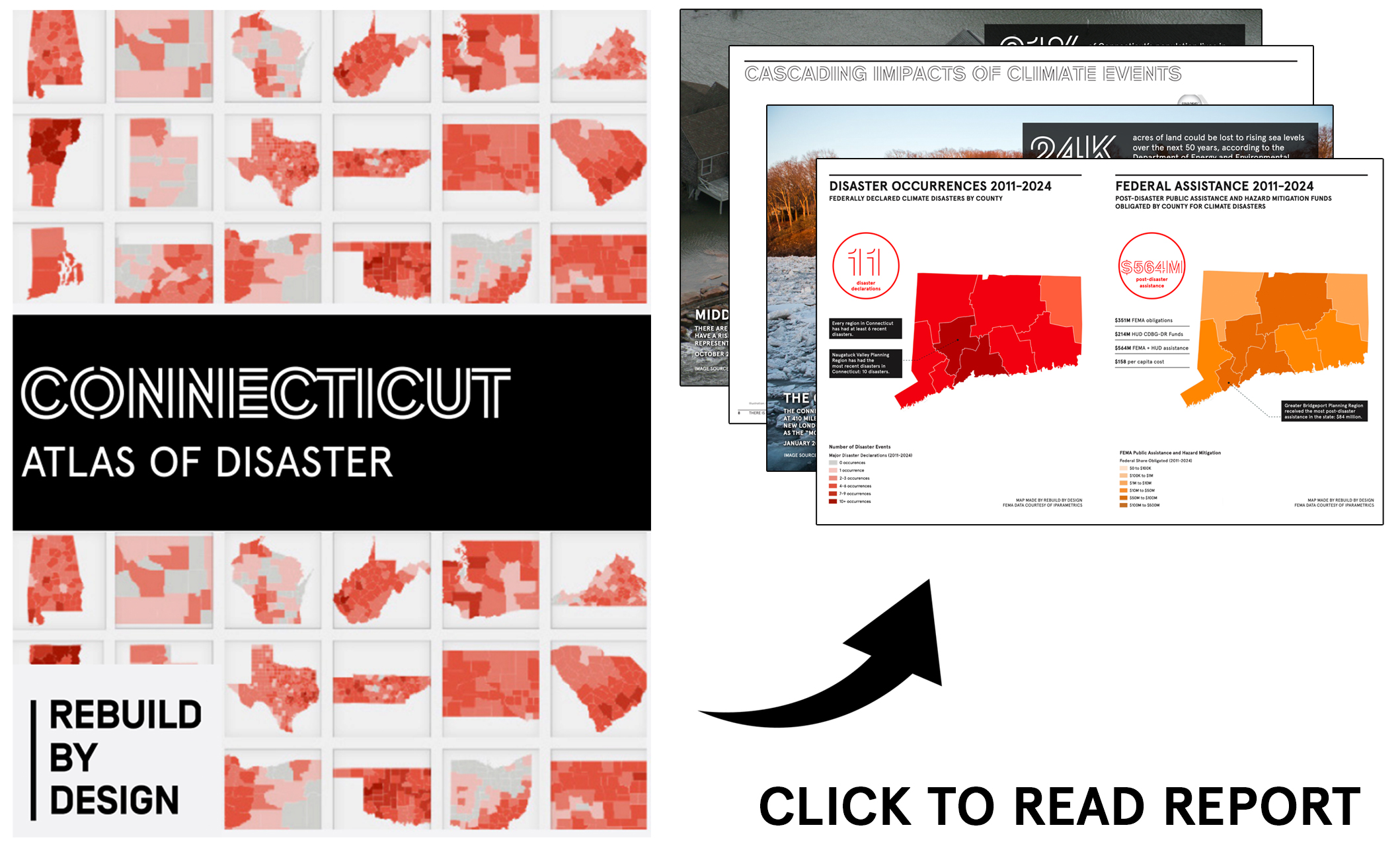
- Connecticut experienced 11 federally declared major disasters, costing taxpayers more than $564 million in federal assistance.
- $350M from FEMA (Public Assistance & Hazard Mitigation)
- $214M from HUD’s Community Development Block Grant Disaster Recovery Program
- Connecticut’s top disaster-impacted regions are Naugatuck Valley (10 disasters), Greater Bridgeport and Northwest Hills (9 each), and the Lower Connecticut River Valley and Southeastern Connecticut regions (8 each).
Without bold investment in resilience, Connecticut residents will continue paying a steep price. Delaying action increases the burden on taxpayers, diverts funds from essential services, and compounds economic strain on communities already grappling with disaster recovery.
FINDINGS
11 DISASTER DECLARATIONS
Between 2011 and 2024, Connecticut faced 11 federally declared major disasters—5 of which were flood-related.
61% of Connecticut’s population AT RISK OF FLOODING
An estimated 61% of Connecticut’s population lives in areas threatened by coastal flooding (DT Department of Energy and Environmental Protection).
Flooding Intensifies By 2050
By 2050, up to 20 inches of sea level rise will make today’s once-in-a-decade floods five to ten times more common across Connecticut’s coastal communities (Resilient Connecticut).
FIND YOUR LEGISLATIVE REPRESENTATIVES
RESILIENT BRIDGEPORT

Resilient Bridgeport is a coastal resilience program led by the State of Connecticut and developed in collaboration with Rebuild by Design, the City of Bridgeport, and federal, state, and local partners. The initiative focuses on the South End neighborhood, a flood-prone peninsula, aiming to address risks from sea level rise, storm surge, and rainfall flooding by implementing integrated stormwater management and coastal flood defense measures. The project was launched following Hurricane Sandy and is supported by the U.S. Department of Housing and Urban Development’s $10 million Rebuild by Design grant, an additional $42 million through the National Disaster Resilience Competition, and state grants totaling over $20 million.
Current efforts include the construction of a new stormwater park, pump station, and elevated evacuation routes, with the goal of reducing chronic flooding and enhancing neighborhood connectivity. The project is under construction.
TOGETHER, WE CAN FIX THIS
Connecticut’s future depends on proactive planning and bold investments today. Rising sea levels, increased flooding, and more frequent extreme heat are already impacting lives, livelihoods, and Connecticut’s core industries—from coastal tourism to healthcare and education. With disasters becoming more common and costly, the time to act is now.
1. Champion Statewide Climate Resilience
Connecticut must commit to a comprehensive, statewide adaptation strategy. Cross-sector collaboration—from infrastructure and transportation to public health and housing—is critical to protect both urban and rural communities from escalating climate threats.
2. Secure Sustainable Funding
Establish dedicated, long-term state funding for resilient infrastructure. Consider innovative solutions, such as green bonds, dedicated climate resilience funds, or regional partnerships, to generate the billions needed for flood protection, energy upgrades, and emergency preparedness.
3. Empower Local Leadership
Support community-driven adaptation projects, especially in the most vulnerable and historically underserved areas. The state should prioritize funding for local solutions that address aging infrastructure, reduce social vulnerability, and deliver equitable resilience for all residents.
Rebuild by Design is working to secure dedicated funding for resilient infrastructure, empowering all Connecticut communities to invest in resilience today.
We are seeking organizations, community leaders, and dedicated advocates who can play an active role in advancing resilience efforts across the state. Your support is critical in securing the funding and policies that will help protect Connecticut’s communities and infrastructure for the future. Contact us >>
THE ATLAS SERIES

ATLAS OF DISASTER REPORT
Released in 2022, the Atlas of Disaster offers a county-by-county snapshot of climate-driven disasters across the U.S. from 2011–2021. The report highlights widespread impacts, gaps in federal policy, and the urgent need for pre-disaster investment in both physical and social infrastructure. Read the report >>
ATLAS OF ACCOUNTABILITY TOOL
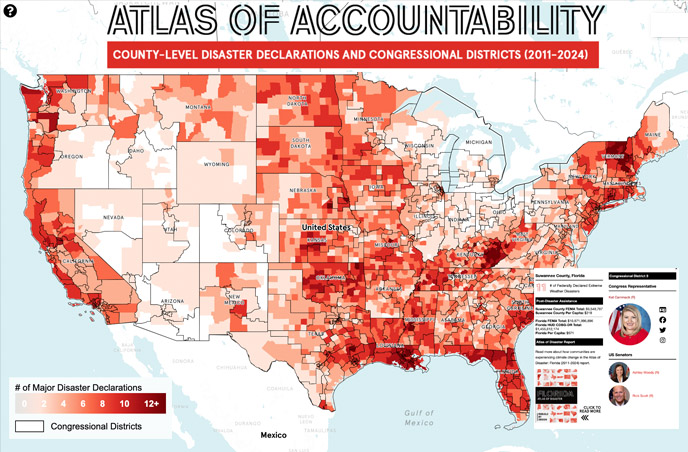
The Atlas of Accountability maps federal disaster declarations and post-disaster assistance obligations for every county in the U.S., with overlays by congressional district between 2011-2024. Explore the map >>

CLIMATE INFRASTRUCTURE WE LOVE
Explore a growing collection of climate infrastructure projects, planning strategies, & funding approaches that are currently helping communities across the U.S. build resilience. Get inspired >>
SHARE YOUR STATE & STORY
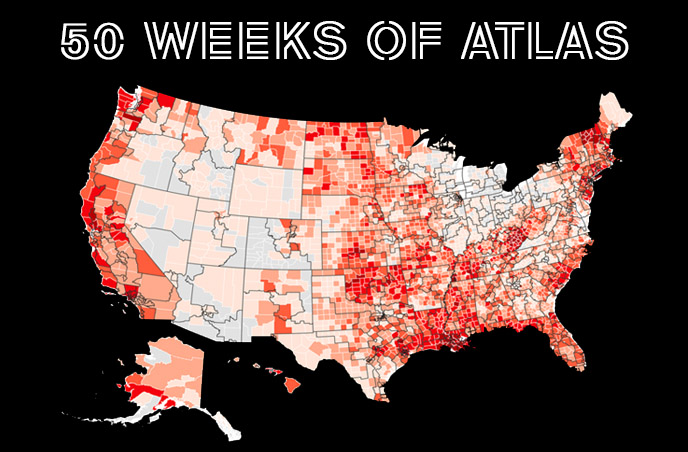
Each week in 2025, we shared a key finding from the Atlas for all 50 states through downloadable graphics and captions. Explore your state’s climate risk data and help spread awareness by sharing it on social media. Download state >>